Functional ingredients — Fruits & extracts

Organic dried pomegranate seeds: technical profile and applications for formulators

Organic dried pomegranate seeds are a functional ingredient with a unique profile, distinct from the peel extracts that dominate the food supplement market. Rich in punicic acid, fibre and polyphenols, they open up original formulation opportunities for brands seeking to make use of the whole fruit within a clean-label, zero-waste approach.

The pomegranate tree and its parts: understanding the raw material

The pomegranate tree (Punica granatum L.) is a fruit tree native to the Middle East and the Mediterranean basin, now cultivated in Spain, Turkey, Iran, Tunisia, Morocco and several countries in sub-Saharan Africa. Its fruit, the pomegranate, is made up of several parts with very different phytochemical profiles, which has a direct bearing on the choice of ingredient for the intended application.

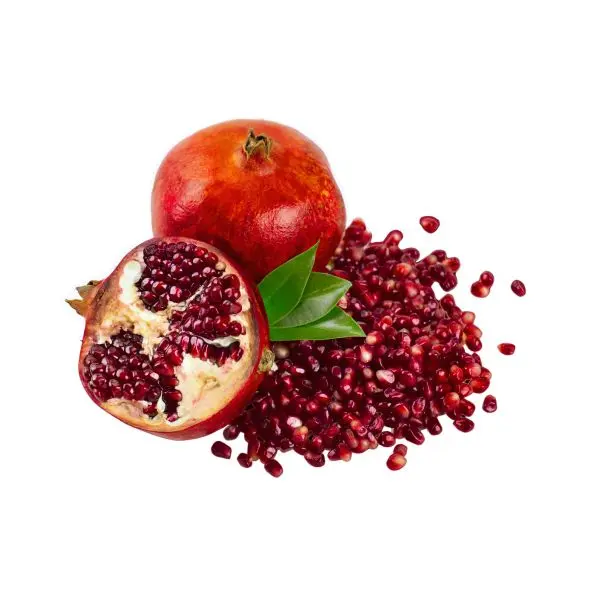
Structure of the fruit: the peel (pericarp) is the part richest in punicalagin and hydrolysable tannins. The arils (small translucent pulpy sacs) are rich in sweet juice, anthocyanins and citric acid. The seeds, located at the heart of each aril, are rich in oil (15 to 20% of the dry seed) with a high punicic acid content, and in insoluble fibre. These seeds are the ingredient covered in this article.

Dried seeds vs peel extract: two ingredients, two formulation approaches

Dried seeds and peel extracts are frequently confused on the market. It is essential to distinguish between them to avoid positioning errors or mismatched expectations on the buyer’s side.

Organic dried seeds

  • Raw, unprocessed ingredient
  • Profile: punicic acid (omega-5), fibre, moderate polyphenols
  • Positioning: clean label, whole food, zero waste
  • Applications: snacking, granola blends, bars, enriched flours, seed infusions
  • Price: more affordable than standardised extracts

Standardised peel extract

  • Ingredient concentrated by aqueous extraction
  • Profile: 30–54% punicalagin, >50% total polyphenols
  • Positioning: nutraceuticals, high efficacy, capsules
  • Applications: food supplements, capsules, stick sachets
  • Price: high (very concentrated active/kg ratio)

Point of attention: dried seeds naturally contain little punicalagin — this polyphenol is concentrated in the peel, not in the seeds. If your formulation targets a strong antioxidant claim based on punicalagin, standardised peel extract is the appropriate ingredient. Dried seeds are positioned on a different axis: distinctive fatty acids, fibre and the overall polyphenol richness of the whole fruit.

Nutritional profile of organic dried pomegranate seeds

Punicic acid
Conjugated omega-5 fatty acid specific to pomegranate. 60–80% of the seed fat fraction. A lipid profile with no direct plant equivalent.
Dietary fibre
20–30% of dry matter. Predominantly insoluble fraction. Supports transit, satiety effect, suitable for functional foods.
Total polyphenols
Present in significant quantities (ellagitannins, ellagic acid, residual anthocyanins). Genuine antioxidant activity, lower than that of the peel.
Proteins
10–15% of dry matter. An interesting amino acid profile for a fruit ingredient. Contributes to the nutritional density of the finished product.
Vitamin C
Present in the fresh fruit, partially degraded during drying. Contribution varies with the process. To be checked on the CoA batch by batch.
Potassium & minerals
Source of potassium, magnesium and phosphorus. A complementary mineral profile in superfood blends.
Residual moisture
<8% for good storage stability. To be checked on receipt, particularly after sea freight or in tropical conditions.
Total lipids
15–20% of dry matter (of which >60% punicic acid). Provides caloric richness and a slightly oily texture.

Punicic acid: a unique fatty acid with strong potential

Punicic acid (9Z,11E,13Z-octadecatrienoic acid) is a conjugated omega-5 polyunsaturated fatty acid, present at very high levels in the oil extracted from pomegranate seeds. It belongs to the conjugated linoleic acid (CLA) family and has a stereochemical structure that is unique in the plant kingdom. Its functional interest is the subject of a growing body of scientific research, particularly in the areas of weight management, inflammatory regulation and cell protection. Although health claims directly linked to punicic acid are not yet authorised by EFSA under Regulation (EC) No 1924/2006, it is a strongly differentiating active for formulators working on innovative positioning in nutraceuticals or active cosmetics.

For brands that include dried seeds as a visible ingredient: punicic acid offers a solid scientific communication angle, distinct from the punicalagin carried by peel extracts. The two actives are complementary and make it possible to position “full-spectrum pomegranate” ranges covering both the lipid fraction and the polyphenol fraction of the fruit.

Applications and compatible matrices

Product format Technical notes
Granola & muesli blends Dried seeds provide crunch, a natural pink-red colour and a distinctive nutritional profile. Can be added directly without prior treatment.
Cereal bars & healthy snacking Performs well in cold-formed or low-temperature agglomerated matrices. The natural lipid content acts as a partial binder. Combine with dried red fruits (cranberry, goji) for colour and nutritional consistency.
Enriched flours & baking mixes Added as a fine fraction (lightly ground seeds) for nutritional enrichment without major texture change. Recommended dosage: 3–8%.
Functional infusions & herbal teas Dried seeds can be included in herbal blends for hot drinks. Partial release of polyphenols and amino acids on infusion.
Powdered superfood blends Finely ground seeds blend into superfood mixes (with moringa, baobab, hibiscus, açaí). They add nutritional density and matrix diversity.
Functional animal feed An emerging market. Pomegranate seeds are being studied as a functional feed additive for their polyphenol content and antioxidant activity. Demand is developing among premium pet food manufacturers.

The “whole fruit” approach and CSR positioning

Pomegranate seeds have historically been a by-product of pomegranate juice and peel extract processing. Including them as an ingredient in their own right is part of a whole-fruit valorisation approach, with no waste, consistent with buyers’ and consumers’ growing expectations regarding the circularity and sustainability of food supply chains. For brands building a strong CSR case, organic pomegranate seeds are an ingredient with dual value: nutritional (punicic acid, fibre, polyphenols) and environmental (zero waste, valorisation of a co-product, documented organic supply chain). Proforma Tropical can provide the geographical and social traceability information needed to build this case.

Regulatory compliance and available documentation

On request, Proforma Tropical provides:

  • Product technical data sheet with full analytical profile
  • Organic certificate (AB / EU Organic) and supplier documentation
  • Allergen information in accordance with Regulation (EU) No 1169/2011
  • Stability data and storage recommendations
  • Geographical traceability information for CSR and responsible sourcing initiatives

Regulatory note: dried pomegranate seeds are a food ingredient within the meaning of Regulation (EU) No 1169/2011. No health claim specific to punicic acid has been authorised by EFSA to date. Claims usable on the finished product must relate to the nutrients present (fibre, potassium, etc.) by meeting the regulatory thresholds in the declared daily portion. We recommend regulatory validation before any commercial communication.

Available packaging

20 kg bag

Multi-ply kraft bag with an airtight food-grade liner, protected from moisture and light. Suitable for small and medium production runs. Can be handled manually.

Pallet

Pallets of 20 kg bags, strapped and stretch-wrapped. For regular production volumes or grouped orders. Tiered pricing on volume commitment.

Recurring supply contracts with secured prices are available for buyers with regular requirements — a lever for controlling raw material costs amid volatile Mediterranean and African fruit prices.

Are you including organic pomegranate seeds in a formulation or range?Volume quote, technical file (data sheet, SDS, quality certificate) — our team replies within 48 hours.

Contact Proforma Tropical

The nutritional and regulatory information in this article is provided for guidance only. Analytical values are representative data and must be verified on the certificate of analysis for each batch. Compliance of claims on the finished product is the responsibility of the manufacturer.
Functional ingredients — Algae & micronutrition

Organic spirulina powder: technical profile and industrial applications for formulators

Organic spirulina powder is one of the most sought-after functional ingredients on the global market for food supplements, functional beverages and sports nutrition. Its exceptional nutritional density, complete protein profile and versatility of incorporation make it a strategic raw material for any formulator looking to build products with a strong naturalness story.

What is spirulina and why in powder form?

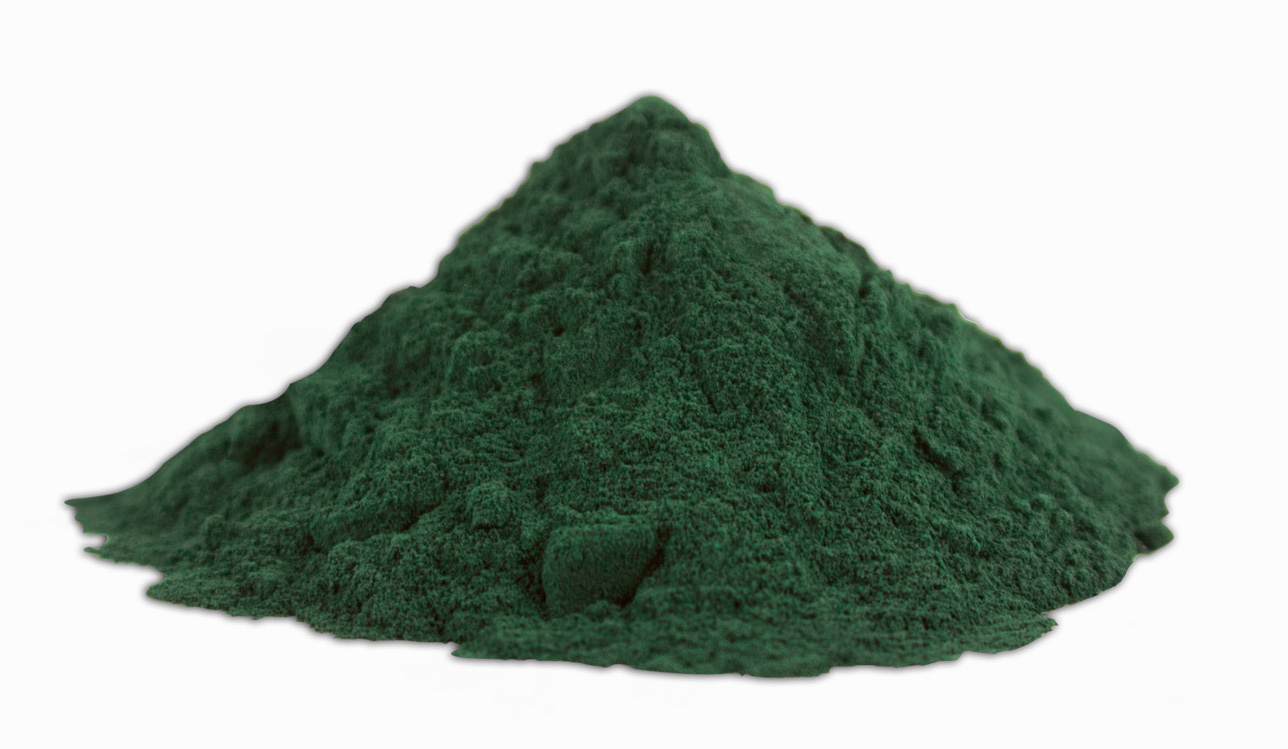
Spirulina (Spirulina platensis or Arthrospira platensis) is a filamentous cyanobacterium cultivated in controlled ponds. Loosely speaking, it is often referred to as a freshwater microalga, in reference to its characteristic blue-green colour due to phycocyanin, its main pigment.

The powder form is obtained by drying the fresh biomass at low temperature (<45 °C), followed by fine milling. This process preserves the integrity of the nutritional profile, particularly heat-sensitive vitamins and phycocyanin, whose content is a direct indicator of drying quality. Unlike tablets or capsules, the powder is a bare ingredient with no excipient, which goes straight into manufacturers’ formulations without any unpacking step.

Powder vs flakes: the powder has a finer particle size than flakes (crisps), which improves its dispersibility in liquid matrices and the consistency of its incorporation into dry blends. For industrial applications (powder blends, bars, encapsulation), powder is systematically preferred to flakes.

Analytical profile of organic spirulina powder

The values below are representative of an industrial-grade organic spirulina powder. They must be verified batch by batch on the Proforma Tropical technical data sheet, which includes the supplier’s certificate of analysis.

Proteins
60–70% of dry matter. Complete amino acid profile, including all essential amino acids.
Phycocyanin
>15% (quality standard). Specific antioxidant pigment. Indicator of drying quality: >20% = premium quality.
Iron
50–70 mg / 100 g. Highly bioavailable. Enables “source of iron” claims on the finished product (Reg. EC 1924/2006).
Vitamins B1, B2
Certifiable source according to European regulatory thresholds. Of interest for energy and vitality formulations.
Copper
Rich in copper (antioxidant). Claim authorised under EC 1924/2006: “contributes to the protection of cells from oxidative stress”.
Beta-carotene
7–10 mg / 5 g of powder. Vitamin A precursor. Of interest for skin, vision and immunity formulations.
Chlorophyll
40–70 mg / 5 g. Gives the characteristic green colour. A natural pigment that can be used for food colouring.
Moisture
<7%. A microbial stability criterion. To be checked systematically on receipt to validate transport conditions.

Regulatory point: spirulina does not benefit from an authorised health claim as such within the meaning of Regulation (EC) No 1924/2006. Claims usable on the finished product must relate to the nutrients it contains (iron, copper, vitamin B1, B2, beta-carotene) and are subject to meeting the regulatory reference thresholds in the declared daily portion. We recommend having your formulation validated by your regulatory department before any commercial communication.

Industrial applications and compatible matrices

Product format Technical notes Indicative dosage
Food supplements Capsules, stick sachets, powders for dilution. The most buoyant segment. The green colour of phycocyanin is a visible quality marker that can be highlighted. 500 mg – 3 g / dose
Functional beverages & RTD Good dispersibility in aqueous media. The intense blue-green colour requires colour management when mixed with other ingredients. Compatible with fruit juices, plant waters and plant-based milks. 1–3 g / serving
Sports nutrition Complete proteins + iron + antioxidant phycocyanin. Positioning on muscle recovery and endurance. Combine with plant protein bases (pea, rice) to enrich the profile. 3–5 g / serving
Bars & healthy snacking Holds up well in fatty and dry matrices. Natural green colouring that can be highlighted on packaging. Beware of baking temperatures above 60 °C: partial degradation of phycocyanin. 2–5%
Powder blends & smoothie packs Compatible with most powdered superfoods (moringa, baobab, chlorella, matcha). Fine particle size = good homogeneity in dry blends. 5–15%
Vegan & vegetarian food A source of plant protein and iron. A strong selling point for brands positioned in this segment. Of particular interest for populations at risk of iron deficiency. Variable

Quality criteria to assess when buying professionally

Not all spirulina powder suppliers offer the same level of quality. The following checkpoints are decisive for an industrial buyer:

Phycocyanin content

This is the most discriminating quality marker. Spirulina dried at low temperature (<45 °C) retains a phycocyanin content above 15%, or even 20% for premium grades. High-temperature or sun drying degrades this pigment and produces a powder of lower nutritional value, often sold at the same price.

Geographical origin and organic certification

The main commercial origins are China, Tunisia, India and, to a lesser extent, France (artisanal production). Organic certification (AB / EU Organic, validated by an accredited body such as Ecocert, Bureau Veritas or equivalent) is now the minimum required by brands positioned in the premium and responsible segment. Proforma Tropical provides the supplier’s certification documentation with every delivery.

Contaminant analyses

As spirulina is a filter-feeding organism, it can concentrate heavy metals (lead, cadmium, arsenic, mercury) and microcystins (cyanotoxins) present in its growing medium. A certificate of analysis (CoA) from an accredited laboratory, including these parameters, is non-negotiable for any serious buyer. The applicable limits are those set by Regulation (EC) No 1881/2006 and its subsequent amendments.

Moisture and stability

Residual moisture above 7% promotes microbial growth and pigment oxidation. To be checked systematically on receipt, particularly for deliveries in 20 kg bags, where variations in logistics conditions (shipping container, tropical transit) can affect quality.

Available packaging

20 kg bag

Multi-ply kraft bag with an airtight food-grade liner, protected from moisture and light. Suitable for small and medium production runs. Can be handled manually.

Pallet

Pallets of 20 kg bags, strapped and stretch-wrapped with light protection. For regular production volumes. Tiered pricing available on volume commitment.

Recurring supply contracts with prices secured over time are available for buyers with regular requirements — an important lever for protecting your margins on an ingredient whose spot prices can fluctuate with harvests.

Market positioning and trends

Spirulina is one of the most sought-after superfoods in Europe, with steadily growing demand driven by three converging trends: the rise of vegan and vegetarian diets, growing interest in alternative proteins and the boom in “green” food supplements. The B2B ingredients segment is seeing sustained demand from supplement manufacturers, sports nutrition brands and functional beverage manufacturers.

The differentiator in this market is documented quality: phycocyanin content guaranteed batch by batch, contaminants analysed, up-to-date organic certification. Industrial buyers who have had negative experiences with low-quality Chinese or Indian spirulina are increasingly attentive to these criteria — a positioning on which Proforma Tropical can stand out.

Including organic spirulina powder in your formulation?

Sample request, technical data sheet with CoA, volume quote — reply within 48 hours.

Contact Proforma Tropical

The nutritional and regulatory information in this article is provided for guidance only. Analytical values are representative data and must be verified on the certificate of analysis for each batch. Compliance of claims on the finished product is the responsibility of the manufacturer.

Functional ingredients — sub-Saharan Africa

Organic baobab powder: technical profile and market opportunities for food and nutrition professionals

Organic baobab powder is steadily establishing itself as one of the most versatile functional ingredients on the African superfood market. Rich in vitamin C, prebiotic fibre and essential minerals, it meets the growing expectations of formulators, brands and artisan producers looking to differentiate their ranges with ingredients of high nutritional value and an authentic story.

Baobab: a traceable ingredient with high perceived value

Baobab (Adansonia digitata) is a tree native to the arid and semi-arid zones of sub-Saharan Africa. Its pulp, which dries naturally inside the pod, is harvested and ground without chemical processing to produce a stable powder that is easy to pack and to incorporate into many food matrices.

Proforma Tropical sources directly from producers and cooperatives in sub-Saharan Africa, which allows us to offer an ingredient with precise geographical traceability — a selling point increasingly sought after by brands positioned in the premium and responsible segment.

The powder is made from pulp that is simply dried and ground, with no added sugar, no additives and no preservatives, giving it a clean label profile and broad compatibility with the most demanding specifications.

Nutritional and functional profile

Organic baobab powder has an analytical profile that justifies its positioning as a functional ingredient in its own right:

Vitamin C
One of the most concentrated plant-based sources. Supports immunity, fatigue and iron absorption claims (Reg. (EC) No 1924/2006).
Prebiotic fibre
Soluble fraction with a prebiotic effect. Applications in digestive nutrition, microbiota and functional drinks.
Minerals
Potassium, calcium, magnesium and iron. Enrichment of low-nutrient matrices without synthetic fortificants.
Moderate glycaemic index
Profile suited to weight management, sports nutrition and metabolic prevention formulations.

Applications and compatible matrices

Product format Technical notes
Functional drinks & RTD Good solubility. Tangy notes (citrus / pear) compatible with hibiscus, ginger, citrus and exotic fruit bases.
Food supplements Capsules, stick sachets, powders for dilution. Anti-fatigue, immunity and digestion formulas with a strong naturalness message.
Sports nutrition Bars, gels, recovery drinks. Provides minerals and vitamin C without synthetic sources.
Healthy snacking & confectionery Energy balls, cereal bars, raw bites. Holds well when cold, subtle natural colouring.
Artisan bakery & patisserie Can be incorporated as a powder into doughs, creams and ganaches (recommended doses: 3–8%).
Infant & senior nutrition Mild profile, free from major allergens. Batch-by-batch analytical verification recommended for vulnerable-population nutrition specifications.

Regulatory compliance and available documentation

Proforma Tropical provides full technical documentation on request to ease integration into your quality processes:

  • Product technical data sheet with full analytical profile
  • Organic certificate (AB / EU Organic) and supplier documentation
  • Allergen information in accordance with Regulation (EU) No 1169/2011
  • Stability data and storage recommendations
  • Geographical and social traceability information for CSR and responsible sourcing initiatives

Health claims: claims relating to vitamin C (immunity, fatigue, iron absorption, collagen) are authorised in the European Union provided that the finished product reaches the regulatory reference thresholds. We recommend having your final formulation validated by your regulatory department or a specialist adviser.

Available packaging

Proforma Tropical organic baobab powder is available exclusively in professional bulk packaging:

20 kg bag

Resealable multi-ply kraft bag with food-grade liner. Suited to small and medium production runs. Easy storage, manual handling possible.

Pallet

Delivered on pallets of strapped and stretch-wrapped 20 kg bags. Suited to regular production volumes or grouped orders. Volume-based tiered pricing available.

For recurring needs, we offer supply contracts with committed volumes and secured prices over a defined period — an important lever for stabilising your production costs in the face of volatile African raw material markets.

Why work with Proforma Tropical on baobab?

Our positioning is one of direct, transparent sourcing in sub-Saharan Africa, backed by a French company (SASU, authorised economic operator) handling administrative, customs and logistics management in compliance with European regulations.

We are not a general-purpose intermediary: baobab is one of our core ingredients, and we have in-depth knowledge of the production areas, harvest seasons and quality constraints specific to this ingredient.

Our CSR commitment is non-negotiable: fair conditions for producers, preservation of harvesting areas and full transparency across the supply chain — elements you can put to direct use in your brand communication.

Developing a formulation, a range or a project around organic baobab?Sample requests, technical data sheets, volume quotes — our team will reply within 48 hours.

Contact Proforma Tropical

The nutritional information and claims mentioned in this article are provided for guidance only. They do not constitute regulatory advice. Compliance of claims on the finished product is the responsibility of the manufacturer.