Functional ingredients — Algae & micronutrition
Organic spirulina powder: technical profile and industrial applications for formulators
Organic spirulina powder is one of the most sought-after functional ingredients on the global market for food supplements, functional beverages and sports nutrition. Its exceptional nutritional density, complete protein profile and versatility of incorporation make it a strategic raw material for any formulator looking to build products with a strong naturalness story.
What is spirulina and why in powder form?
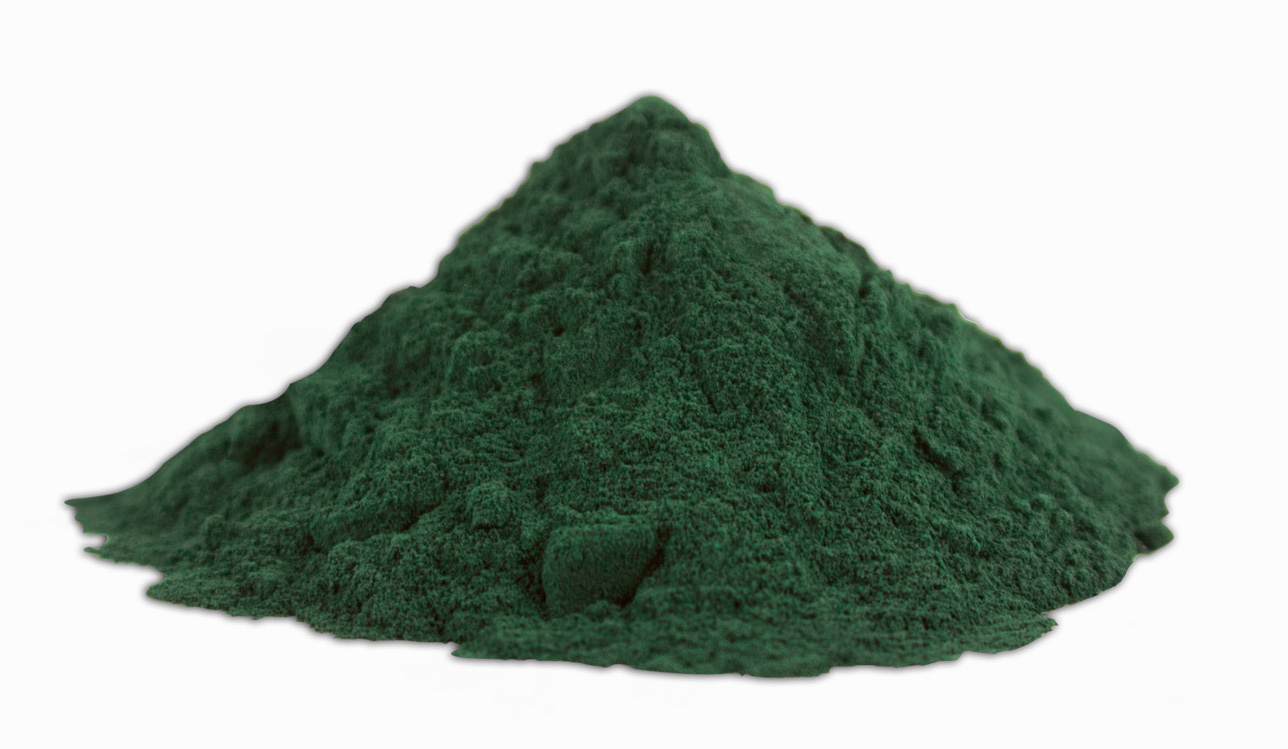
Spirulina (Spirulina platensis or Arthrospira platensis) is a filamentous cyanobacterium cultivated in controlled ponds. Loosely speaking, it is often referred to as a freshwater microalga, in reference to its characteristic blue-green colour due to phycocyanin, its main pigment.
The powder form is obtained by drying the fresh biomass at low temperature (<45 °C), followed by fine milling. This process preserves the integrity of the nutritional profile, particularly heat-sensitive vitamins and phycocyanin, whose content is a direct indicator of drying quality. Unlike tablets or capsules, the powder is a bare ingredient with no excipient, which goes straight into manufacturers’ formulations without any unpacking step.
Powder vs flakes: the powder has a finer particle size than flakes (crisps), which improves its dispersibility in liquid matrices and the consistency of its incorporation into dry blends. For industrial applications (powder blends, bars, encapsulation), powder is systematically preferred to flakes.
Analytical profile of organic spirulina powder
The values below are representative of an industrial-grade organic spirulina powder. They must be verified batch by batch on the Proforma Tropical technical data sheet, which includes the supplier’s certificate of analysis.
60–70% of dry matter. Complete amino acid profile, including all essential amino acids.
>15% (quality standard). Specific antioxidant pigment. Indicator of drying quality: >20% = premium quality.
50–70 mg / 100 g. Highly bioavailable. Enables “source of iron” claims on the finished product (Reg. EC 1924/2006).
Certifiable source according to European regulatory thresholds. Of interest for energy and vitality formulations.
Rich in copper (antioxidant). Claim authorised under EC 1924/2006: “contributes to the protection of cells from oxidative stress”.
7–10 mg / 5 g of powder. Vitamin A precursor. Of interest for skin, vision and immunity formulations.
40–70 mg / 5 g. Gives the characteristic green colour. A natural pigment that can be used for food colouring.
<7%. A microbial stability criterion. To be checked systematically on receipt to validate transport conditions.
Regulatory point: spirulina does not benefit from an authorised health claim as such within the meaning of Regulation (EC) No 1924/2006. Claims usable on the finished product must relate to the nutrients it contains (iron, copper, vitamin B1, B2, beta-carotene) and are subject to meeting the regulatory reference thresholds in the declared daily portion. We recommend having your formulation validated by your regulatory department before any commercial communication.
Industrial applications and compatible matrices
| Product format | Technical notes | Indicative dosage |
|---|---|---|
| Food supplements | Capsules, stick sachets, powders for dilution. The most buoyant segment. The green colour of phycocyanin is a visible quality marker that can be highlighted. | 500 mg – 3 g / dose |
| Functional beverages & RTD | Good dispersibility in aqueous media. The intense blue-green colour requires colour management when mixed with other ingredients. Compatible with fruit juices, plant waters and plant-based milks. | 1–3 g / serving |
| Sports nutrition | Complete proteins + iron + antioxidant phycocyanin. Positioning on muscle recovery and endurance. Combine with plant protein bases (pea, rice) to enrich the profile. | 3–5 g / serving |
| Bars & healthy snacking | Holds up well in fatty and dry matrices. Natural green colouring that can be highlighted on packaging. Beware of baking temperatures above 60 °C: partial degradation of phycocyanin. | 2–5% |
| Powder blends & smoothie packs | Compatible with most powdered superfoods (moringa, baobab, chlorella, matcha). Fine particle size = good homogeneity in dry blends. | 5–15% |
| Vegan & vegetarian food | A source of plant protein and iron. A strong selling point for brands positioned in this segment. Of particular interest for populations at risk of iron deficiency. | Variable |
Quality criteria to assess when buying professionally
Not all spirulina powder suppliers offer the same level of quality. The following checkpoints are decisive for an industrial buyer:
Phycocyanin content
This is the most discriminating quality marker. Spirulina dried at low temperature (<45 °C) retains a phycocyanin content above 15%, or even 20% for premium grades. High-temperature or sun drying degrades this pigment and produces a powder of lower nutritional value, often sold at the same price.
Geographical origin and organic certification
The main commercial origins are China, Tunisia, India and, to a lesser extent, France (artisanal production). Organic certification (AB / EU Organic, validated by an accredited body such as Ecocert, Bureau Veritas or equivalent) is now the minimum required by brands positioned in the premium and responsible segment. Proforma Tropical provides the supplier’s certification documentation with every delivery.
Contaminant analyses
As spirulina is a filter-feeding organism, it can concentrate heavy metals (lead, cadmium, arsenic, mercury) and microcystins (cyanotoxins) present in its growing medium. A certificate of analysis (CoA) from an accredited laboratory, including these parameters, is non-negotiable for any serious buyer. The applicable limits are those set by Regulation (EC) No 1881/2006 and its subsequent amendments.
Moisture and stability
Residual moisture above 7% promotes microbial growth and pigment oxidation. To be checked systematically on receipt, particularly for deliveries in 20 kg bags, where variations in logistics conditions (shipping container, tropical transit) can affect quality.
Available packaging
Multi-ply kraft bag with an airtight food-grade liner, protected from moisture and light. Suitable for small and medium production runs. Can be handled manually.
Pallets of 20 kg bags, strapped and stretch-wrapped with light protection. For regular production volumes. Tiered pricing available on volume commitment.
Recurring supply contracts with prices secured over time are available for buyers with regular requirements — an important lever for protecting your margins on an ingredient whose spot prices can fluctuate with harvests.
Market positioning and trends
Spirulina is one of the most sought-after superfoods in Europe, with steadily growing demand driven by three converging trends: the rise of vegan and vegetarian diets, growing interest in alternative proteins and the boom in “green” food supplements. The B2B ingredients segment is seeing sustained demand from supplement manufacturers, sports nutrition brands and functional beverage manufacturers.
The differentiator in this market is documented quality: phycocyanin content guaranteed batch by batch, contaminants analysed, up-to-date organic certification. Industrial buyers who have had negative experiences with low-quality Chinese or Indian spirulina are increasingly attentive to these criteria — a positioning on which Proforma Tropical can stand out.
Sample request, technical data sheet with CoA, volume quote — reply within 48 hours.
The nutritional and regulatory information in this article is provided for guidance only. Analytical values are representative data and must be verified on the certificate of analysis for each batch. Compliance of claims on the finished product is the responsibility of the manufacturer.